
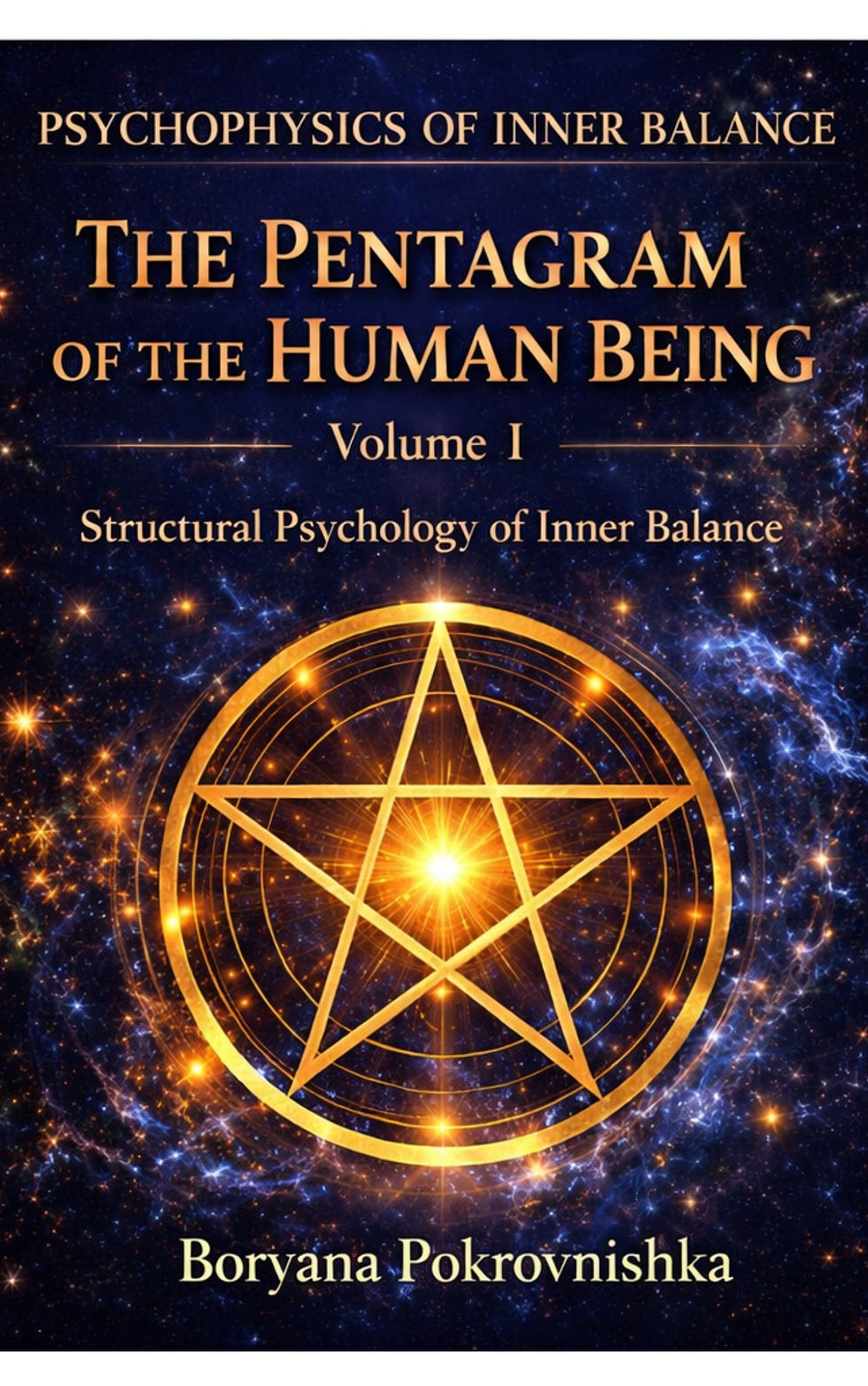
Psychophysics of Inner Balance
- pokrovnishka
- Feb 27
- 2 min read
Why this book is not just another psychology book
Modern man does not suffer from a lack of information.
He suffers from inner fragmentation.
We have knowledge, but lack clarity.
We have emotions, but lack stability.
We have goals, but lack inner consistency.
“Psychophysics of Inner Balance” was born from a simple but fundamental question:
What does inner balance actually mean?
Not as a mood.
Not as positive thinking.
But as structural harmony.
A different look at the psyche
I draw inspiration for this work from the words of the Master ( Beinsa Duno) , who views man not as a chaos of experiences, but as a system of interconnected forces subject to conscious harmonization.
The book presents an integrative model based on five basic principles:
Wisdom - cognitive clarity and awareness
Love - emotional regulation and connectedness
Truth - volitional congruence
Justice - value orientation
Virtue - stable identity
These principles do not exist in isolation.
Their synchronization determines the resilience of the personality.
When one axis dominates or weakens, an imbalance occurs.
Four levels of consciousness
The model also considers four levels of inner development - from automatic reactions to conscious orientation to meaning.
This allows for a deeper understanding of:
burnout
inner conflicts
repetitive patterns
identity crises
Who is this book for
This book is not motivational reading.
It is for people who:
seek a structural understanding of themselves
work in the field of psychology and development
feel that inner balance requires more than techniques
More than a book
"Psychophysics of Inner Balance" lays the foundations for a broader methodological project, including a research framework and a structural diagnostic model.
It is the first step towards conscious integration.
📘 If you want to consider your inner world not as a set of symptoms, but as a system - this book is for you.





Comments