Healthy Life
Welcome to Healthy Life,
where well-being and happiness intersect. Discover a journey towards a fulfilling and balanced life.


THE PHILOSOPHY OF INNER BALANCE
Where Ancient Wisdom Meets the Laws of the Universe
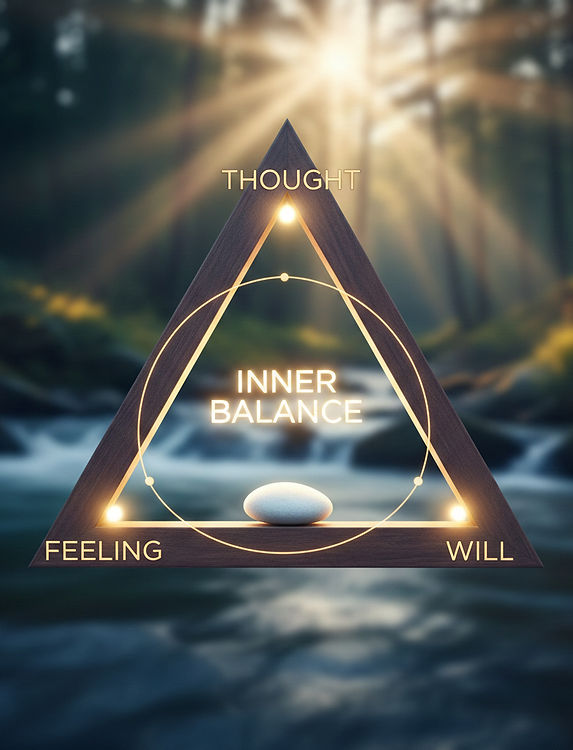
The Philosophy: The Triad of Existence
True happiness is not a destination, but a state of Equilibrium. We believe that every human being is composed of three sacred pillars:
-
Thought (The Architect): The vision that gives life direction.
-
Feeling (The Engine): The emotional energy that fuels our journey.
-
Will (The Driver): The courage to take action in the physical world.
When these three are out of alignment, we experience "Psychological Friction"—stress, anxiety, and the feeling of being "stuck." Inner Balance is the art of aligning your mind, your heart, and your hands into a single, powerful vector of light.
HOW WE ACHIEVE IT: THE NEWTONIAN STEPS
To master the soul, we must understand the laws that govern all motion. We apply The Physics of the Spirit to bring your life back into orbit.
STEP 1: Overcoming the Inertia of the Past
The Philosophy: You are not your history; you are your potential. However, habits are heavy.
The Newton Law: Newton’s First Law.
An object (your life) stays in its current rut unless acted upon by a Conscious Force.1
-
The Work: We identify the "resting states" of your negative thoughts and stagnant feelings. We apply the first "Impulse" of awareness to break the cycle of habit and start the movement toward change.
STEP 2: The Acceleration of Intent
The Philosophy: Effort without focus is just noise. To change, you must choose a direction.
The Newton Law: Newton’s Second Law (2$F=ma$).3
Your transformation (Acceleration) depends on the Force of your Will divided by the Mass of your limiting beliefs.
-
The Work: We "lighten the mass" by deconstructing old traumas and fears. Then, we focus your Will into a single, sharp vector. When the mass is small and the force is focused, your progress becomes unstoppable.
STEP 3: The Harmony of Action and Reaction
The Philosophy: You cannot fight yourself and win. Peace is the absence of internal war.
The Newton Law: Newton’s Third Law.
For every internal "push" (suppression), there is an equal "push back" (anxiety/tension).
-
The Work: We stop the internal struggle. Instead of "forcing" yourself to change, we teach you Psychological Resonance. By acting with integrity and acceptance, you eliminate the "Reaction" of stress, allowing you to live in a state of Flow.
The Result: The State of Flow
When you master these laws, you reach the center of the "Inner Balance" circle. You no longer feel like a victim of circumstances. You become the Conscious Creator of your own momentum.
© 2025 Inner Balance – Boryana Pokrovnishka. All Rights Reserved.
Proprietary Methodology combining Psychological Dynamics and Classical Mechanics.

The Three Dynamics

Static Inertia: Why starting is the hardest part

Vector Chaos: Why effort without direction leads to burnout

Opposing Forces: Why you are subconsciously sabotaging your own success.
"Finished the Quiz? Don't leave your results to chance."
The Main Schools of Psychology and Their Core Ideas
Psychology as a science has evolved for more than a century, passing through different stages and directions known as psychological schools. Each school offers a unique perspective on the human mind and behavior, providing specific methods for understanding and supporting people.
Below is an overview of the main psychological schools that continue to shape modern theory and practice.
1. Psychoanalysis – Exploring the Depths of the Unconscious
Founder: Sigmund Freud
Psychoanalysis focuses on unconscious motives, early childhood experiences, and inner conflicts that shape personality. According to Freud, much of our thoughts, feelings, and behaviors are driven by processes outside our conscious awareness.
Later theorists such as Carl Gustav Jung and Alfred Adler expanded his ideas, introducing concepts like the collective unconscious and the striving for meaning and achievement.
2. Behaviorism – The Psychology of Observable Behavior
Founders: John B. Watson, B. F. Skinner
Behaviorists argue that psychology should study observable behavior, not internal experiences. They emphasize that behavior is learned through rewards and punishments, meaning it can be changed by altering environmental conditions.
This school laid the foundations of behavioral therapy, which is still used today to treat anxiety, addictions, and phobias effectively.
3. Humanistic Psychology – The Power of Personal Potential
Key Figures: Carl Rogers, Abraham Maslow
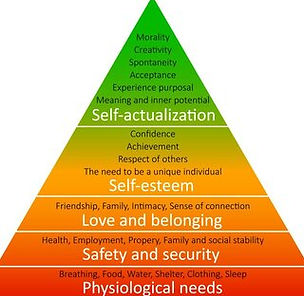
Humanistic psychology places the individual at the center, highlighting freedom, personal choice, and the innate drive toward self-actualization. It views each person as unique and capable of growth and fulfillment.
This approach emphasizes empathy, unconditional positive regard, and authentic dialogue as the foundation of the therapeutic relationship.
4. Cognitive Psychology – Thinking as the Key to Change
Founders: Jean Piaget, Aaron Beck, Albert Ellis
Cognitive psychology explores how thoughts influence emotions and behavior. The way we interpret events determines how we feel and respond.
This perspective gave rise to Cognitive Behavioral Therapy (CBT) and Rational Emotive Behavior Therapy (REBT) – two of the most effective methods in modern psychological practice.
5. Existential Psychology – Meaning, Freedom, and Responsibility
Key Figures: Viktor Frankl, Rollo May, Irvin Yalom
The existential school views human beings through the lens of existence, personal choice, and responsibility. It explores fundamental questions about the meaning of life, freedom, suffering, and authenticity.
Its aim is not only to relieve symptoms but to help individuals understand their human experience and live more meaningful, fulfilling lives.
Conclusion
The various schools of psychology do not exclude each other – they complement one another. Modern psychology draws from all of them, combining insights to create more flexible and effective approaches to understanding human behavior and growth.
Whether it’s analyzing the past, changing behavior, understanding thoughts, or searching for meaning – each school offers a unique path toward self-awareness and inner harmony.
Psychoanalysis
Humanistic psychology
Positive psychotherapy
Psychoanalysis, method of treating mental disorders, shaped by psychoanalytic theory, which emphasizes unconscious mental processes and is sometimes described as “depth psychology.” The psychoanalytic movement originated in the clinical observations and formulations of Austrian psychiatrist Sigmund Freud, who coined the term psychoanalysis. During the 1890s, Freud worked with Austrian physician and physiologist Josef Breuer in studies of neurotic patients under hypnosis. Freud and Breuer observed that, when the sources of patients’ ideas and impulses were brought into consciousness during the hypnotic state, the patients showed improvement.
Rogers, Maslow, and May shaped the early character of humanistic psychology and remain its most respected figures. Rogers's view of human functioning assumes the existence of internal tendencies toward self-actualization that can be blocked by the vicissitudes of socialization, but can also be released through a therapeutic relationship of unconditional positive regard, accurate empathic understanding, honesty, and integrity. Maslow, under the influence of Kurt Goldstein, developed his hierarchical theory of human motivation. Strongly influenced by existential theologian Paul Tillich , Rollo May introduced the European current of existentialism and phenomenology into humanistic psychology.
Positive Transcultural Psychotherapy (PTP according to Peseshkian since 1977 ) is a psychotherapeutic method developed by psychiatrist and psychotherapist Nosrat Peseshkian and associates in Germany in early 1968. This humanistic psychodynamic psychotherapy is based on the concept of the positive beginning of human nature. PTP is an integrative method that includes humanistic, systemic, psychodynamic and CBT elements. Today there are centers and trainings in about twenty countries around the world. It should not be confused with positive psychology .


Special Offers